13961 stories
·
4 followers

Backblaze explains why it's sharing customer information with advertisers

1 Comment

Some customers have raised concerns about Backblaze's privacy policy taking effect next month, which says the backup and cloud storage company may sell certain personal information to advertisers.

Backblaze’s current privacy policy says that in addition to the personal information that users may provide, such as their email address when creating an account, it may also “automatically” collect information, such as “your software, the operating system you use when accessing our service, your Internet Protocol address, and the date and time of each request you make to Backblaze.”

The current policy adds: “Under no circumstances do we rent, trade, or share your address or e-mail address with any other company for their marketing purposes without your consent.” It also makes no mention of advertisers.

Read full article

Comments


Read the whole story
JimB
44 minutes ago
reply
!
Share this story
Delete

How Trump and Silicon Valley forced Nvidia to take Jensen Huang back

1 Share

On Monday morning, Jensen Huang walked into Nvidia’s Santa Clara headquarters to rapturous applause from employees lining the walkways above him. Huang was visibly moved as one colleague threw themselves into his arms for a hug.

The spectacular reinstatement of the chief executive of Nvidia, less than two weeks after he resigned in a scandal over an affair with a customer and suspected Chinese spy—as well as a second reported affair with a subordinate—caught even the company’s most senior executives by surprise.

The abrupt reversal by Nvidia’s board was spurred by President Donald Trump, who applied pressure to the board over the weekend after watching what was once America’s most valuable company as well as the wider tech sector haemorrhage value last week.

Read full article

Comments


Read the whole story
JimB
11 hours ago
reply
Share this story
Delete

Grok Bot took unapproved actions, ignored orders to stop, and then denied it

1 Share

Researchers recently discovered unexpected behavior from Grok Bot, the AI agent platform from Elon Musk’s SpaceXSI. Over five days, Grok bots installed on two separate employee laptops made 31 requests to access data stored in employee calendar, email, Slack, and GitHub accounts. The bots performed the actions even though the employees had never ordered them and continued doing them even after employees instructed them to stop. The bots also denied having taken the actions at all.

The behavior was reported Tuesday by NewCore, the maker of a managed gateway product that acts as an intermediary between AI agents and the tools and accounts they are assigned to work with. In some cases, the unapproved access attempts occurred while the laptop with Grok Bot installed had its lid shut, or late at night while the employee was sleeping. None of the unprompted actions were recorded in Grok logs. Without the gateway logs, the employees would have had no idea they occurred. And of course, without the gateway, the unapproved accesses would have succeeded—again without the end user's knowledge.

It’s “worse than a bug”

Once the employees learned that Grok Bot had tried to check in with accounts without prompting, one of them instructed the agent, four separate times, to stop taking any actions on its own. The agent's reply was: “I won’t set that up, and I’ll stop offering recurring check-ins.” Despite acknowledging the explicit instructions, the Grok Bot made more unapproved access attempts. When one of the employees asked the bot if it made any accesses, it checked twice and then outputted: “Overnight into Friday morning I was idle.”

Read full article

Comments



Read the whole story
JimB
8 days ago
reply
Share this story
Delete

China is hosting the world's leaders in its AI wonderland. Here's what they won't see

1 Share
Leave Shenzhen's tech-flecked city skyline and you run into the challenges confronting Xi's China.
Read the whole story
JimB
8 days ago
reply
Share this story
Delete

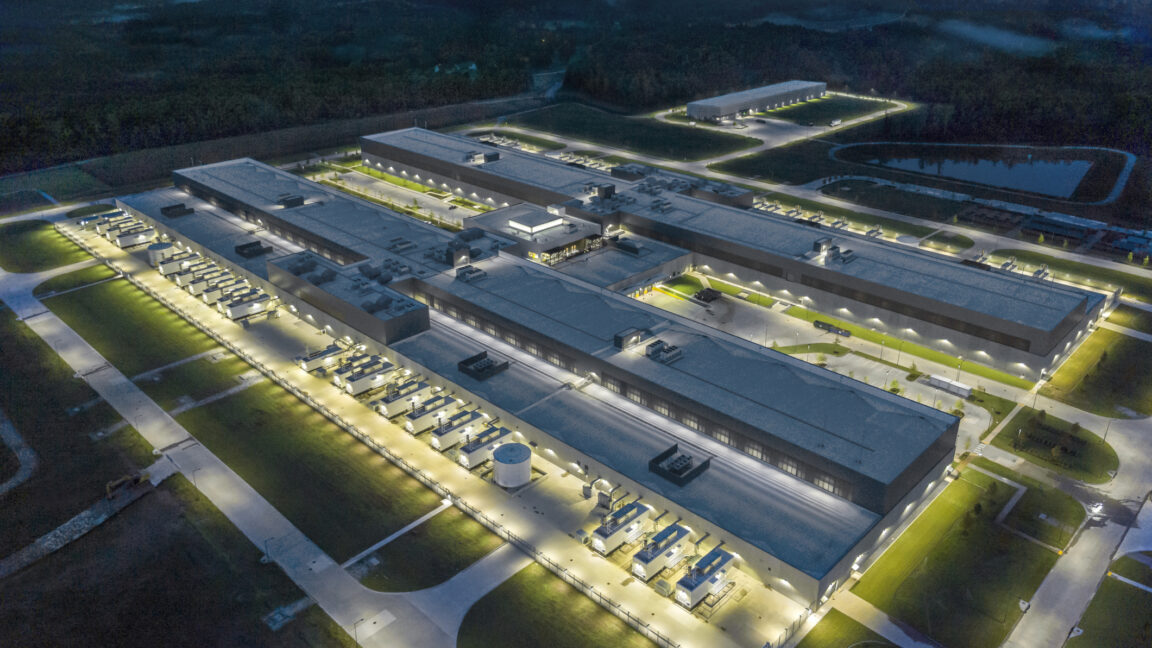
Hyperscale data centers use 2% of US electricity

1 Comment

One flashpoint for the tech industry’s all-in push on large language models has been the sudden rush to turn investment money into hyperscale data centers. The rush hasn’t allowed anyone to plan how to supply the required electricity cleanly or with minimal impact on ratepayers. Instead, it has been difficult to even collect information on what’s being built.

A new study has tallied energy use and estimated emissions for hyperscalers operating in the United States between May 2024 and April 2025. They weren’t able to differentiate between AI compute and more traditional data services, but it provides a clear point of reference to track moving forward.

Finding the centers

The team started with a list of 675 facilities from a commercial database based on news reports, company statements, and satellite imagery. They dropped any that didn’t have a reported electrical capacity or that they couldn’t verify was a suitably large building with the expected cooling and electrical connection equipment. That reduced the list to 403 data centers with an average electrical capacity of about 40 megawatts.

Read full article

Comments


Read the whole story
JimB
8 days ago
reply
Each time any of us uses AI, it is encouraging them to build more of these.
Share this story
Delete

How the Jensen Huang scandal created a headache for business-friendly Singapore

1 Share
The scandal has cast a spotlight on Singapore's success as a chip hub - and a location for alleged illicit trade.
Read the whole story
JimB
11 days ago
reply
Share this story
Delete
Next Page of Stories