If you think you know what there is to know about far-right campaigner Tommy Robinson, think again. Born Stephen Yaxley, Robinson is known as the white nationalist agitator who co-founded the English Defence League and whose extremist anti-immigration views have attracted the praise of the likes of Elon Musk. But a Channel 4 documentary released this week by freelance documentary film-maker Matt Shea shows just how much deeper the Robinson rot goes.
Shea’s film, which aimed to follow Robinson’s money trail – given that he has raised potentially millions of pounds from supporters and there has been, until now, little evidence of where that money ended up – revealed shocking details not only about Robinson’s potentially fraudulent financial dealings but also disturbing new information about his treatment of survivors of grooming gangs, his questionable claims about being “debanked” and even evidence that he may have committed perjury by lying under oath.
The Nerve sat down with Matt to discuss some of the most important revelations that his year-long investigation uncovered.
What did you find out in your new film, Tommy Robinson: Where’s The Money Gone? about Robinson’s donations and fundraising efforts, and where the money was coming from and ending up?
So one of the main things I sensed about Tommy Robinson is that behind him is this mass of people who are constantly donating to him. He has raised hundreds of thousands of pounds, if not millions, from his supporters, but it's very unclear what that money is spent on because most of the companies that have handled the donations that he's called for have never filed accounts.
I went to his Unite the Kingdom rallies, and most of the people I spoke to had donated money to him. He's constantly appealing for money. And I think the most shocking revelation regarding fundraising that I think we found was about a grooming gang survivor who goes by the pseudonym “Kate” in the film.
Can you tell us more about Kate?
Kate is a survivor of one of the most notorious grooming gangs, known as the Telford grooming gang. What happened to her is so traumatic I couldn't even bear to repeat it. Robinson included her in his so-called documentary series The Rape of Britain. He initially approached her and said that he kind of tracked her down using the police database and using someone – his associate – who used to work for MI5. She was quite traumatised by him approaching her, because she had tried to hide her address after what had happened to her due to fear of reprisals from the grooming gang.
When he tracked her down, she was suffering from PTSD and was just in a really terrible state, and he persuaded her to be in his film. Shortly after that, she was actually about to attempt suicide outside the home of one of her attackers when Tommy Robinson called her. And he told her: don't do it... But unbeknown to her, he was recording this phone call at the time. At first she had agreed to be in the film, and he had paid her £500, but at a certain point she said she didn’t want to be in this film any more. She said: “I don't want you to identify me. I don't want you to use the phone call that you recorded without my consent.”
But then he used all of those things in this documentary, which he screened in Telford, her hometown, where these attacks happened. He screened it publicly. And that's when she first found out from the screening that the phone call was in the film, that her real name had been used. And she was furious.
On top of that, she said that she never received the funds that Tommy Robinson raised in her name. And you know, grooming gang survivors are such a central part of his message, a major reason that he often cites for people to donate to him. And to think that this grooming gang survivor who he mentions specifically during his fundraiser doesn't receive any of the money was shocking.
And Robinson’s “fundraising” for grooming gang survivors is also part of how he connected with Elon Musk – can you tell us about that?
Yes, so for Elon Musk, the idea that Britain is this “fallen nation”, overrun by grooming gangs, and that the government's doing nothing about it, was a real draw to Tommy Robinson for him. So Robinson has clearly attracted a lot of support and wealth from these women's stories, including from Musk.
What else can you tell us about the connection between Tommy Robinson and Elon Musk?
I was shocked to see that Robinson had taken a trip to Russia, which was billed as a trip with Elon Musk’s father. But in fact it was the Musk Family Foundation that funded that trip – so there's a big question there. Why is Musk's family foundation sending a far-right British activist to get exposure to members of the Kremlin – and, while he is there, promoting content of some quite extremist neo-nazi Russian ultranationalist groups?
The other interesting thing is that when Tommy Robinson was in Russia was around the time that the [Henry Nowak trial] became a cause célèbre of the right. And Robinson filmed or shared footage of these ultra-nationalists in Russia holding a rally in memorial of this British teenager that had died. So that is bizarre, right? The idea that an ultra-nationalist Russian group is holding a rally memorial of a British teenager who was murdered is very strange.

Tommy Robinson, real name Stephen Yaxley-Lennon, at a demonstration in Southampton about the police's involvement in Henry Nowak death, 2 June, 2026
And the Musk relationship is also crucial for Robinson’s platform because Musk restored his X account after he was suspended, right?
Yes. The thing about Musk and Robinson on X is that Musk frequently boosts Robinson's tweets by reposting them or commenting on them. And Musk generates a huge amount of traffic for Robinson on X. The things he says are carefully worded. They very carefully toe the line so that they never call for outright violence to a group of people or a person. But the comments underneath are some of the most shocking things I’ve seen. People call for a genocide of Muslims, people call for hate crimes, for the worst things you can imagine, frequently, very frequently, underneath those comments.
And for your film you also managed to speak to some really important sources who used to support Robinson but had become concerned. Can you tell us about them?
One really important source is Paul Bates. He used to work in the heart of Tommy Robinson's crowd security team in 2024 and 2025. And he became concerned that Robinson was essentially milking poor working-class people for their money and then spending it all on his family and his lifestyle.
There’s a particular case in which a man called Peter Lynch, who was a 61-year-old grandfather who who was convicted of violent disorder during the 2024 riots. And he sadly took his own life in jail.
And Robinson took up the cause and he kind of called Lynch a martyr. And while Robinson was in prison for something else, one of his key organisers at a rally appealed for donations for Lynch's family. But it was later revealed that no money appeared to have gone to Peter Lynch's family. Now, Robinson's explanation for that was that they didn't want the money for whatever reason. But ultimately Robinson’s family is the only family that benefited from this appeal, which was meant to in part go to the family of this man who died.
In the film there’s also a brilliant interview in the film with a former director of public prosecutions, who had some very interesting things to say about the evidence that you uncovered. Can you tell us a bit about that?
So we spoke to Sir Max Hill, the former director of public prosecutions. We presented him with the evidence we had found and he said that Robinson’s failure to pass on the funds to the grooming gang survivor in our film is likely to be considered fraud, so that could lead to a criminal investigation. But not only that, there's this kind of complicated issue around when Robinson was found guilty of libelling Syrian teenager Jamal Hijazi [who lives in Huddersfield], who Robinson said had attacked English girls. He was found to have libelled him and had to pay £100,000 in damages to Hijazi.
But Robinson claimed at the time that he couldn't pay because he didn't have enough money and he didn't have any assets.
Robinson was asked by the high court about Lennon Consultancy Ltd, which handled donations from his supporters and was run by his ex-wife, Jenna Lennon. He was asked: what did this company do? And, under oath, he replied: “It was a company owned by my ex-wife. It's not my company, and I don't know”.
But I was able to obtain a document that shows he was actively involved in running this company: I obtained a legal agreement signed by him on behalf of this company. We also found emails that show him kind of handling company business. And when I spoke about that to Sir Max Hill, he said this could constitute perjury and that that could be a matter for the police to investigate.
Can you tell us about Robinson’s use of the idea of him being “debanked” in his fundraising campaigns, and about how you personally tested that theory?
Absolutely. Tommy Robinson has gotten a lot of mileage out of it, because a lot of the people who I spoke to who've donated to Tommy Robinson donated to him specifically because of this notion that he is “debanked”. He claims he can’t get a bank in the UK so people donate to him in cash or in crypto.
But I found a bank account in his name. And to prove that it was real, I sent him £1 with the reference “just checking”, and it went through successfully. So, if I can send money to a UK bank account in his name, why is he telling his supporters that no UK bank account will process payments for him? In response to that, he said the account I found is a “personal basic account” and he says “I do not have a normal current account”. I'm not quite sure what that means…
You spoke to another very powerful source who was an ex-associate of Robinson’s. Can you tell us about Lauren?
I genuinely think that Lauren Southern is one of the most inspirational people I've met because she is someone who made her entire career and her entire personality about being rightwing, criticising feminism, but then she was taken by Tommy Robinson to meet Andrew Tate in Romania. She says that she was raped by Andrew Tate [which Andrew Tate denies].
She’s got contemporary evidence of what she alleges, including medical evidence. And it made her completely reconsider a lot of her views about the right. She decided to go public with those allegations, knowing that it would lose her bunch of followers, knowing that it would lead to a horrific campaign of abuse, and attempts to discredit her, which goes on to this day. I mean, the abuse I get for doing this journalism is bad, but it is nothing compared to the abuse that someone like Lauren gets. And she knew that would happen, but she did it anyway. She also had the courage to kind of disavow her views that she had been espousing on social media for so long.
And she helped put a crucial piece of the puzzle into place by telling you that, in her view, he was definitely motivated by financial gain?
Yes. So she used to work with Tommy Robinson. She was young at the time, and she remembers that, you know, he spent a lot of money on partying, on drugs. She talks about how he loves Gucci and expensive cars. Ultimately, she believes from her experience with him that he's motivated hugely by money.
Tommy Robinson: Where’s The Money Gone? is available to stream on channel4.com
The Nerve is a fearless, independent media title launched by five former Guardian / Observer journalists: investigative journalist Carole Cadwalladr, editors Sarah Donaldson, Jane Ferguson and Imogen Carter and creative director Lynsey Irvine. We cover culture, politics and tech, brought to you in twice weekly newsletters on Tuesdays and Fridays (sign up here). We rely on funding from our community, so please also consider joining us as a paying member. You can read more about our mission here.
 Log in


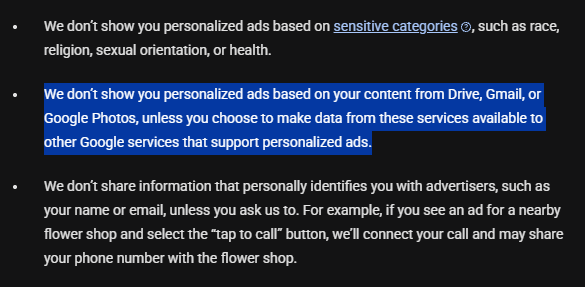 Updated language on when your sensitive data might inform ads.
Credit:
Google
Updated language on when your sensitive data might inform ads.
Credit:
Google